

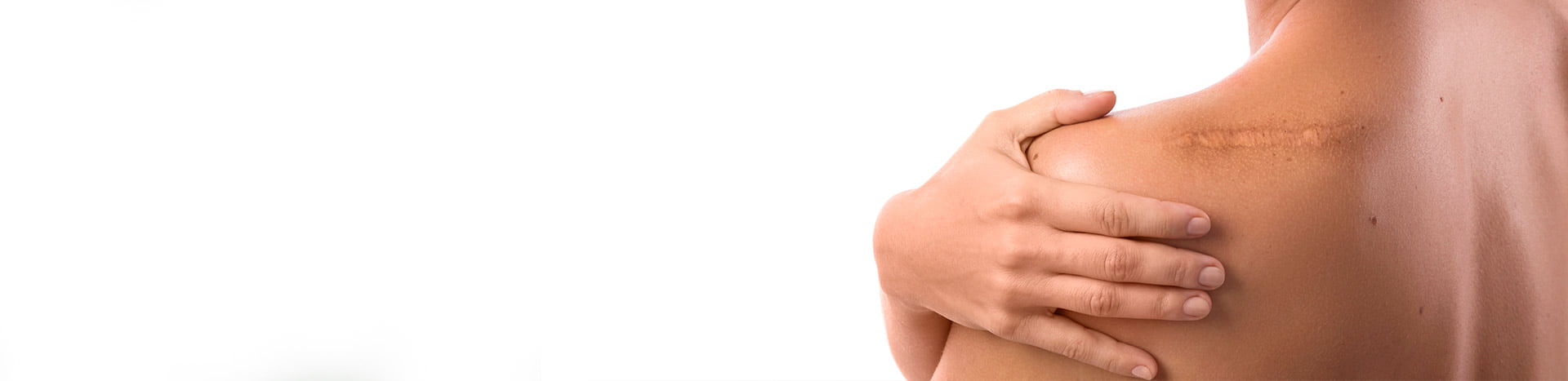
What is Scar Correction?
A scar is the visible, residual part of an injury to the dermis layer. Acne scars, deep wounds, or surgical interventions. Many causes, the same mark.
Correction of scars on the skin can be treated in two ways:
- Through minor surgery;
- Through clinical procedures such as local infiltration of corticosteroids.
It is important to understand that it is impossible to make a scar disappear completely.
What happens, for example, in corrective surgery is that the "old" or abnormal tissue is replaced with a new scar—less bothersome and much more discreet. At the end of the treatment, it will have the same color and texture as normal skin.
Types of Scars
Not all wounds leave a mark. When they reach the most superficial area of the skin, they can regenerate without any after-effects. When they reach the dermis, most leave scars—more or less severe, more or less obvious.
There are different types of scars:
- Extended: these are flat scars, with no changes in pigmentation;
- Hypertrophic: raised scars, usually hyperpigmented (with color);
- Keloids: raised, hyperpigmented scars that extend beyond the initial scar and are associated with pain or itching;
- Retractable: scars that limit the elasticity of tissues, causing their retraction and potentially leading to aesthetic or functional changes.
Treatment to Correct Unsightly Scars
Indications
Scar correction treatments are universal and recommended for healthy people who are bothered by the appearance of their scars.
They are also recommended for anomalies resulting from:
- Defects in scar formation;
- Acne marks or other diseases that have left marks on the skin.
However, it is important that the patient has a realistic perception of the results of the treatments.
Procedure
The correction will depend on the type of scar alteration. It can range from local infiltration with corticosteroids to surgical removal or remodeling of the scar under local anesthesia.
The initial consultation with a specialist doctor will determine the most effective method for your case.
Injectable treatment
Recommended for small scars that are depressed or atrophic. The goal is to smooth the skin.
Corticosteroid injections are also recommended for hypertrophic or keloid scars. The aim here is to reduce collagen formation, resulting in a reduction in scar size and thickness.
Surgical treatment
Best suited for wide and/or extensive scars.
The procedure results in a narrower, shorter and much more discreet quality scar.
Postoperative
When surgical correction is necessary, the stitches are removed after 7 to 14 days, depending on where the scar was removed from.
After the stitches are removed, the resulting scar should be moisturized and massaged daily. SPF 50+ sunscreen should also be applied to minimize its visibility.
Subsequent treatment may also involve elastic compression or application of silicone gel, depending on the location of the scar.
Medical Specialist
in Scar Correction
Dr. Carolina Andresen
- Graduate in Medicine and Surgery with specific training in Plastic Reconstructive and Aesthetic Surgery
- Attended 42 national and international courses and meetings in the field of Plastic Surgery
- Awarded 6 scientific merit awards






 English (UK)