



What is Rosacea?
Rosacea is a chronic, progressive, inflammatory skin disease that is very common and affects the skin of the face.
By affecting the face, it has consequences on people's self-esteem and quality of life.
It is characterized by small, dilated red blood vessels that appear on the face. It mainly affects young and adult women—from the age of 30—with fair skin, eyes, and hair.
Initially, the vessels dilate, causing slight and sudden erythema. (flushing) which then disappears. At this point, it's easy to disguise with a little makeup.
Over time, what was sporadic becomes constant. The disease worsens, the erythema becomes permanent, and small pimples (papulopustules) begin to appear on the cheeks and nose.
When nothing is done to treat the disease, fibroglandular tissue proliferates, causing phymas, giving rise to what is called rhinophyma – a swollen, coarse, bulbous nose.
This is the natural progression of the disease and what many women report.
The disease manifests itself mainly in the region of the cheekbones (cheeks), chin, forehead and nose.
If left untreated, it tends to worsen and makes treatments less effective aesthetically.
It's also important to understand that this condition is different from acne. For a differential diagnosis, you should consult a specialist.

Causes
The mechanisms underlying this disease are still a mystery.
Rosacea stems from a little-known vascular condition that affects the blood vessels of the face. Facial veins malfunction, leading to blood stagnation and dilated vessels.
There's also an associated genetic predisposition. It occurs more frequently in women than in men—and is very rare in children.
There are, however, different types, depending on the level of severity:
- Grade 1 – Erythematotelangiectatic rosacea: characterized by protruding blood vessels and redness, being the most common.
- Grade 2 – Papulo-pustular rosacea: In these cases, pimples and pustules appear – red, firm and, in some cases, painful bumps on the skin that resemble the manifestations of acne (although the disease is different).
- Grade 3 – Phymatous rosacea: In this evolutionary phase, there is an increase in the volume and thickness of the skin in certain areas of the face.
- Grade 4 – Ocular rosacea: When it also affects the ocular region, patients describe dry, red, congested and irritated eyes.

Risk Factors
There are some risk factors that promote the emergence of this disease – which may be “dormant” for a certain period of time.
They are:
- Prolonged and frequent sun exposure;
- Climatic factors with temperature changes;
- Hormonal variations;
- Strong emotions;
- Consumption of hot, spicy or alcoholic drinks;
- Between others.
For women, using makeup that's inappropriate for this skin condition also contributes to worsening the signs and symptoms of the disease. It's important to include creams prescribed by a specialist doctor in your beauty routine, tailored to your condition.
There is no definitive cure, but there are effective treatments that alleviate the symptoms of the disease and restore quality of life to those affected.
Treatment options vary depending on the severity and type of rosacea.
Clinical Cases - Before and After
See the before and after photos of the treatment of this disease.

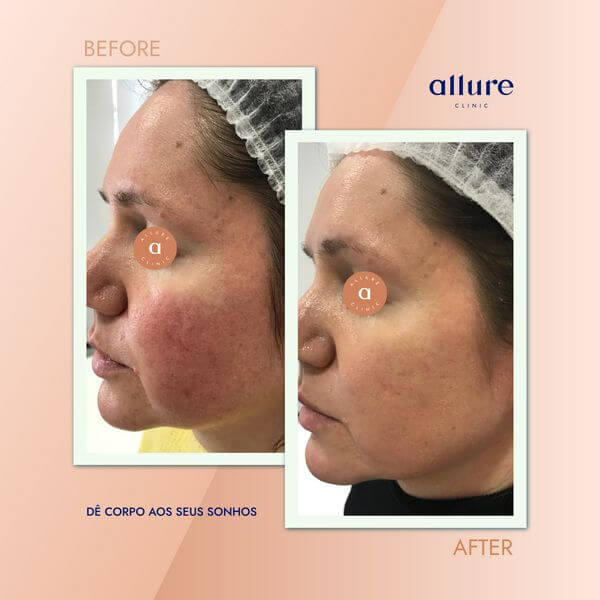
THE rosacea is a very common skin disease that mainly affects the face. It can manifest as persistent erythema, telangiectasia, and sometimes papules and pustules develop.
It can be aggravated by several factors, such as: heat, cold, sunlight, spicy food, alcohol, stress or hormonal changes.
Treatment and control of the situation involves the use of creams, oral medications and laser or pulsed light.
We present the clinical case of Dr. Ana Moreira, of a patient with rosacea who improved significantly after 2 sessions of pulsed light, with a reduction in erythema, burning and discomfort associated with this clinical situation.
In the Allure Clinic We are leaders in laser treatments, look for us and feel good in your skin!
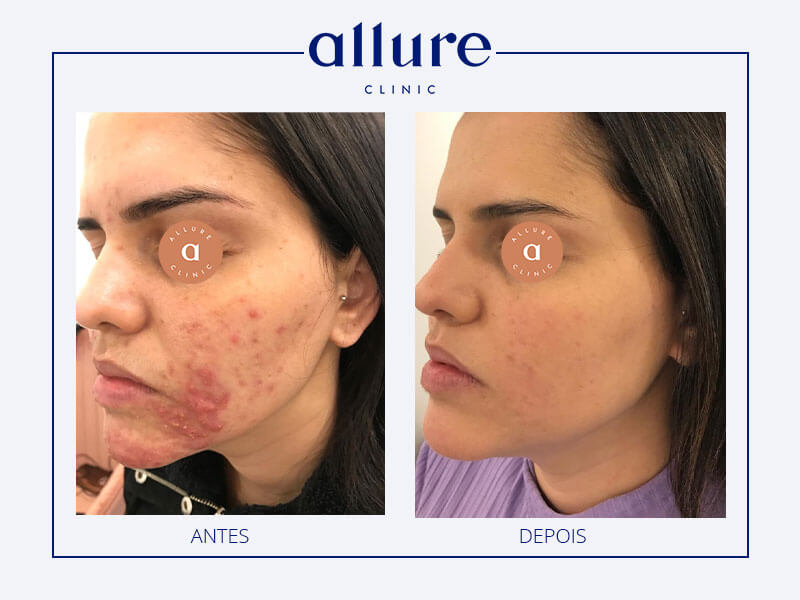

In this clinical case, Dr. Ana Isabel Moreira, Cortisone Rosacea was treated using mometasone furoate cream for 6 months.


Treatment: Laser / IPL (intense pulsed light).
- Patient's age: 55 years old
- Problem: Rosacea
- Treatment: Intense Pulsed Light (IPL)
- Results: Photographs before and 2 months after an IPL session
Rosacea Treatments
Laser
The laser is specifically designed to reduce redness and visible telangiectasias, as well as rhinophyma. This therapy also reduces recurrence of the disease. It is currently the standard treatment for rosacea.
There are several types of lasers. During the diagnostic consultation, the specialist will determine the most appropriate treatment protocol for each situation.
Application of Creams
This treatment involves the application of specific creams with anti-inflammatory and antibiotic properties, prescribed by a specialist doctor.
Always consult a dermatologist and avoid using the same medication as other people, as each case is different. Otherwise, it can have devastating effects.
Oral Medication
This therapy involves taking antibiotics to reduce skin lesions. Topical treatment is indicated for grade 2 (papulopustular rosacea).
Medication can be combined with antibiotic creams/gels. This type of treatment is not recommended for long periods.
Medical Specialist
in Rosacea
Dr. Ana Isabel Moreira
- Aesthetic Dermatologist
- Graduated from the Faculty of Medicine of the University of Porto
- Specialist in Dermatology and Venereology
- Reviewer of scientific articles at the invitation of international journals
- Member of the Portuguese Society of Aesthetic Medicine (SPME)






 English (UK)