

Learn all about the Doppler ultrasound exam on the lower limbs
Learn how the Doppler ultrasound exam on the lower limbs helps in the early detection of vascular disorders
THE Doppler ultrasound examination of the lower limbs It's used to analyze veins and arteries, enabling the diagnosis of vascular disorders and early treatment of cardiovascular diseases. In this article, we seek to clarify what the test consists of, the conditions for which it's indicated, how it's performed, and its main benefits.
What is the purpose of the Doppler ultrasound on the legs?
The Doppler ultrasound exam is indicated to evaluate the structure of blood vessels (size, presence of obstructions or lesions) and their flow. Using high-frequency sound waves (ultrasound), it determines the speed and direction of blood in the body.
This examination constitutes the appropriate auxiliary diagnostic means to identify:
- Blood clots;
- Malfunctioning valves in the veins of the legs (venous insufficiency);
- Heart valve defects and congenital heart disease;
- Blocked arteries (arterial occlusion);
- Deep vein thrombosis;
- Superficial venous thrombosis;
- Decreased blood circulation in the legs (peripheral arterial disease);
- Bulging arteries (limb aneurysms);
- Narrowing of an artery (artery stenosis).
It can also be used to check the effects of an intervention, for periodic monitoring or therapeutic planning of pathologies that can cause a stroke.
It's an important observation tool for ruling out the presence of thrombi in the leg veins, ruling out an alternative diagnosis. It's also essential for guiding procedures in vascular surgeries.
What types of Doppler ultrasound exams on the legs are there?
To assess blood flow in the lower limbs, there are two types of Doppler ultrasound: venous and arterial.
Venous Doppler ultrasound of the lower limbs
It is indicated in cases of suspected deep vein thrombosis, when there is partial or total obstruction of a vein in the deep venous system.
In addition to accurately assessing whether there is a thrombus in the blood vessel, it allows you to determine whether it is recent, old, or if there are vascular complications.
This examination is also performed in cases of varicose veins or other symptoms of chronic venous insufficiency in the lower limbs, such as: swelling, red or scaly skin.
Arterial Doppler ultrasound of the lower limbs
It analyzes arterial changes in the lower limbs, such as the presence of atheromatous plaques, vascular calcifications, or peripheral arterial disease (PAD). It is essential in the diagnosis of patients with atypical symptoms.
It allows the assessment of blood circulation in patients with cardiovascular risk factors, undergoing arterial revascularization of the lower limbs or with suspected iatrogenic injury after arterial catheterization.
It is also indicated to determine the severity of arterial disease, helping to define the healing potential of ulcers.
What are the advantages of Doppler ultrasound on the legs?
When compared to other diagnostic tests, such as Computerized Tomography (CT) or Magnetic Resonance Imaging (MRI), Doppler Ultrasound offers many advantages, including:
- Painless and non-invasive examination;
- No known side effects;
- No needles are used;
- No ionizing radiation is used;
- It is safe for adults, children, elderly or pregnant women;
- No preparation needed;
- Does not require rest after the exam;
- It's quick (about 20 minutes);
- More economical than computed tomography (CT);
- More economical than magnetic resonance imaging (MRI).
How is the Doppler ultrasound exam performed on the lower limbs?
The doctor begins by talking to the patient to learn about their most common symptoms and the reason for the exam. Depending on the area being examined, they will be asked to change into a gown and remove any objects that could hinder the exam, such as jewelry or other accessories.
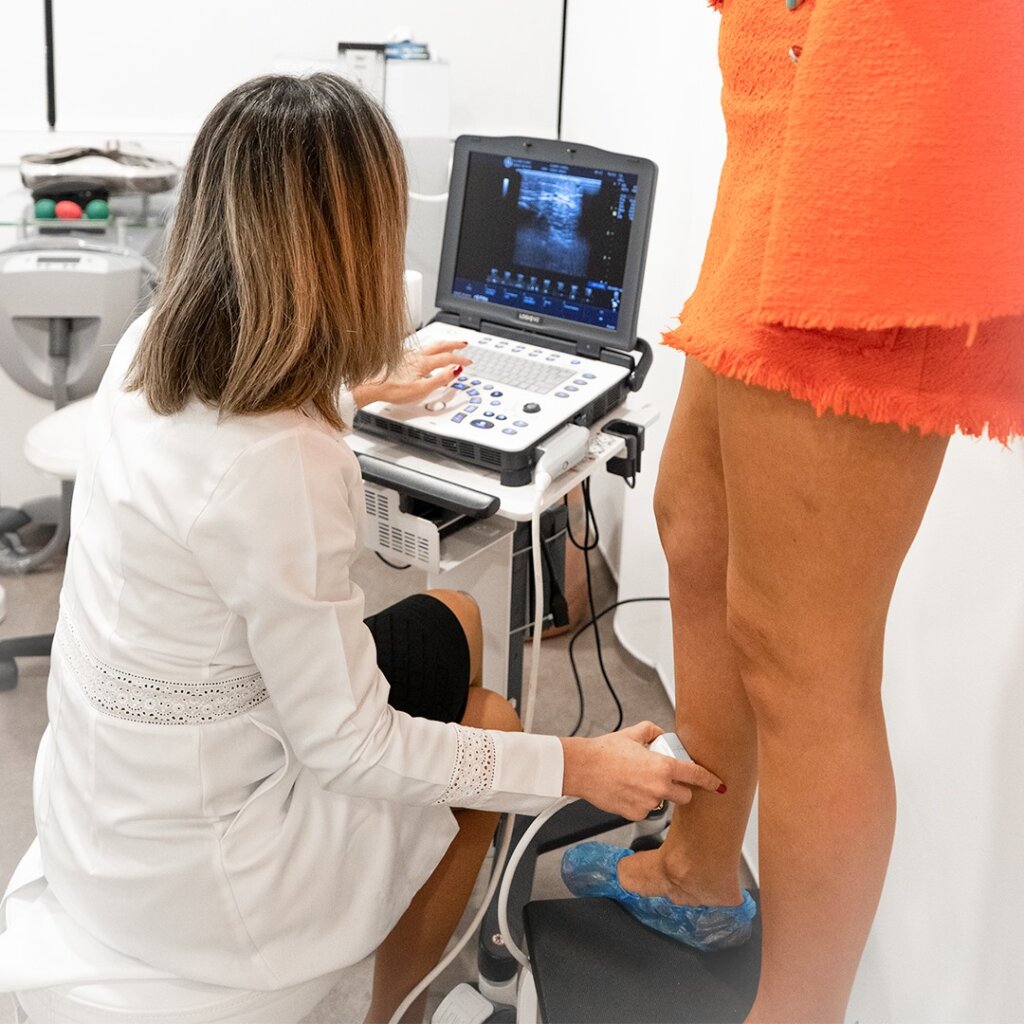
Venous Doppler ultrasound is performed with the patient standing, to facilitate gentle manual pressure. An ultrasound probe is used, pressed against the skin and moved along the lower limbs. To better examine the arteries, it may be necessary to place blood pressure cuffs on various areas of the body.
Before beginning, a gel will be applied to facilitate gliding and image acquisition. The probe sends sound waves through the tissues to the blood vessels, which echo and are returned to a computer. This information will be translated into graphs and images with indicators of blood flow in your arteries.
Where to have the Echo Doppler exam?
It's common to perform an ultrasound Doppler during a vascular surgery appointment. This allows for an immediate diagnosis and treatment recommendations, eliminating the need for further analysis.
The Doppler ultrasound exam on the legs represents an effective, fast, non-invasive and painless way to identify pathologies or diseases that can have serious consequences for your health.
How much does an Eco Doppler exam cost?
You can request prior information about the price of the Doppler ultrasound examination on the lower limbs.
Prevention and early treatment save lives! Take care of your health, Make an appointment today with your Vascular Surgery specialist.
Sources:

Dr. Joana de Carvalho
- Graduated from the Faculty of Medicine of the University of Porto
- Specialist in Angiology and Vascular Surgery
- Fellow of the European Board of Vascular Surgery
- Member of the College of Phlebology
 English (UK)